




The Lagos State Government has revealed that no fewer than 10,634 environmental offenders were arrested across the state within one year as part of intensified enforcement operations targeted at improving sanitation and restoring environmental order.
2views
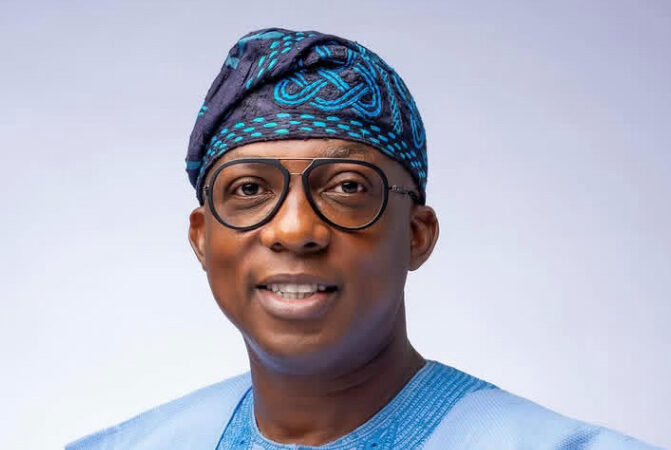
The Commissioner for Environment and Water Resources, Tokunbo Wahab, disclosed this during the 2026 Ministerial Press Briefing held at the Bagauda Kaltho Press Centre in Alausa, according to a statement issued on Sunday by the ministry’s Director of Public Affairs, Kunle Adeshina.
Providing a breakdown of the arrests, Wahab said 5,715 individuals were apprehended for illegal highway crossing, while 3,886 others were arrested for offences such as street trading, environmental pollution, and cart pushing.
He further revealed that 102 persons were arrested for open defecation, while another 931 offenders were apprehended for waste management-related violations across the state.
According to the commissioner, the enforcement campaign forms part of the Lagos State Government’s broader strategy to create “a cleaner, healthier, flood-resilient, and environmentally sustainable megacity” in line with the THEMES Plus Agenda of the administration.
Wahab stated that the ministry, through its various agencies, intensified enforcement activities leading to the arrest and prosecution of environmental offenders, removal of illegal traders and squatters, and issuance of environmental abatement notices.
“The ministry also intensified enforcement activities through its agencies, leading to the arrest and prosecution of environmental offenders, removal of illegal traders and squatters, and issuance of environmental abatement notices across the state,” he said.
The commissioner also highlighted progress made in waste management and environmental sustainability through strategic collaborations and recycling initiatives.
“We have enhanced the waste-to-wealth initiative with the signing of 12 new partnerships on environmental sustainability and have intensified monitoring and enforcement activities against indiscriminate waste disposal and environmental violations,” Wahab added.
He disclosed that the state government commissioned the Ikosi Waste-to-Energy Biodigester Plant situated within the Ketu Fruit Market to convert organic waste into electricity, cooking gas, and agricultural fertiliser.
According to him, the facility processes 0.5 tonnes of organic waste daily, generating 30 kilowatt-hours of electricity for lighting and cold storage while reducing carbon emissions by an estimated 9,000 tonnes annually.
Wahab further stated that the state maintained its ban on Styrofoam and single-use plastics, noting that over 137,530 kilograms of PET plastics had been removed from the environment through recycling and recovery programmes.
On climate governance, the commissioner said Lagos retained its position as Nigeria’s leading state in climate governance for the second consecutive year.
He added that the state successfully hosted the 2025 Lagos International Climate Change Summit focused on financing Africa’s coastal resilience and blue economy opportunities.
The commissioner also disclosed that over 100 air quality monitoring sensors had been installed across Lagos, while cleaner fish processing technology was introduced in Makoko to reduce smoke emissions and improve public health.
Addressing flood control efforts, Wahab said the ministry cleaned and maintained 18 primary drainage channels spanning 76 kilometres, alongside secondary drainage channels covering 178 kilometres across the state.
He added that emergency flood abatement operations were conducted in flood-prone communities covering approximately 210 kilometres.
Wahab concluded that the achievements recorded in sanitation, climate action, drainage infrastructure, environmental enforcement, and waste management reflected the Sanwo-Olu administration’s commitment to improving the living conditions of Lagos residents.
add a comment