






36views
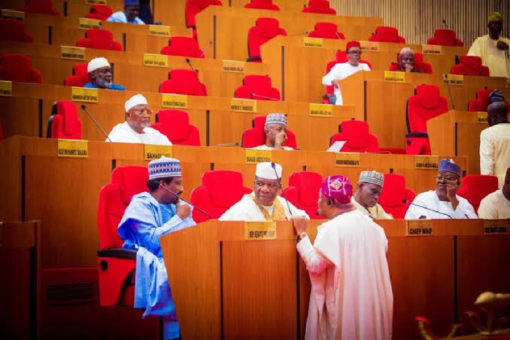
The Nigerian Senate has passed the Constitution of the Federal Republic of Nigeria (Alteration) (State Police) Bill, 2026, marking a major step toward the establishment of state-controlled policing structures across the country.
The executive bill, transmitted by President Bola Ahmed Tinubu, was formally introduced for first reading on Tuesday before lawmakers concluded preliminary legislative work ahead of yesterday’s extensive debate and eventual passage.
Leading the debate, Senate Leader Opeyemi Bamidele described the proposal as a “historic” reform, stressing its urgency in response to the country’s escalating security challenges.
Lawmakers also approved a related amendment increasing funding for the Nigeria Police Trust Fund from 0.5 percent to 1 percent of the Consolidated Revenue Fund, aimed at strengthening policing capacity nationwide.
The plenary session was attended by top government officials, including Attorney-General of the Federation and Minister of Justice Lateef Fagbemi (SAN), Chief of Staff to the President Femi Gbajabiamila, and governors Uba Sani (Kaduna), Lucky Aiyedatiwa (Ondo), and Dapo Abiodun (Ogun), alongside state Attorneys-General.
During deliberations, Senator Enyinnaya Abaribe, Chairman of the Senate Committee on Power, said he had previously opposed the idea of state police but now supported it due to worsening insecurity, noting the need for grassroots-based solutions.
Similarly, Senator Aminu Waziri Tambuwal, Chairman of the Senate Committee on Housing, backed the bill, describing state policing as essential for strengthening federalism and improving internal security.
Chief Whip Tahir Monguno also urged support for the amendment, calling it a necessary reform to enhance national security response systems.
At the conclusion of debate, Senate President Godswill Akpabio commended lawmakers for what he described as a historic legislative milestone, expressing confidence that the reform would strengthen Nigeria’s ability to combat terrorism, banditry, kidnapping, and other crimes.
Bamidele, in his presentation, emphasized that the bill establishes national minimum standards for recruitment, training, discipline, accountability, and use of force to ensure professionalism across all state police formations.
He also highlighted safeguards against political abuse, stating that no governor would be allowed to misuse state police for partisan or personal purposes, with any federal intervention requiring presidential approval, Senate oversight, and judicial review.
Following Senate approval, the bill will now proceed to the House of Representatives and subsequently to the 36 State Houses of Assembly, where it must secure approval from at least two-thirds before presidential assent.
Observers anticipate that the legislative process could be concluded in the coming weeks.
Lagos State Governor Babajide Sanwo-Olu welcomed the development, describing it as “epochal” and a major victory for true federalism and national security reforms under President Tinubu’s leadership.
add a comment